Understanding the underlying pathophysiological mechanisms driving a patient's pain and dysfunction is essential for effective treatment. Yet analyzing pain patterns, tissue involvement, and biomechanical factors requires extensive clinical knowledge and can be time-consuming.
PhysiologicPRISM's AI transforms this complex clinical reasoning process into a streamlined, evidence-based workflow that enhances diagnostic accuracy while saving time.
Why Pathophysiological Analysis Matters
Identifying the source and mechanisms of pain is crucial for several reasons:
Accurate Diagnosis
- Distinguishes somatic vs. neurogenic vs. visceral pain
- Identifies specific tissue involvement
- Differentiates mechanical from inflammatory processes
Targeted Treatment
- Guides intervention selection based on pain mechanism
- Optimizes treatment dosage and progression
- Prevents ineffective "shotgun" approaches
Patient Education
- Explains pain in understandable terms
- Sets realistic expectations
- Improves treatment adherence
Clinical Reasoning Documentation
- Demonstrates systematic thought process
- Supports provisional diagnosis
- Meets professional documentation standards
The Challenge of Pain Mechanism Analysis
Traditional pathophysiological analysis is cognitively demanding:
- Complex Pattern Recognition: Requires correlation of multiple clinical findings
- Extensive Knowledge Base: Demands understanding of anatomy, biomechanics, and pathology
- Time Intensive: Takes 10-15 minutes of careful analysis
- Inconsistent Application: Quality varies with clinician experience and fatigue
- Documentation Burden: Articulating reasoning clearly for records
The PhysiologicPRISM Solution
Structured Analysis Framework
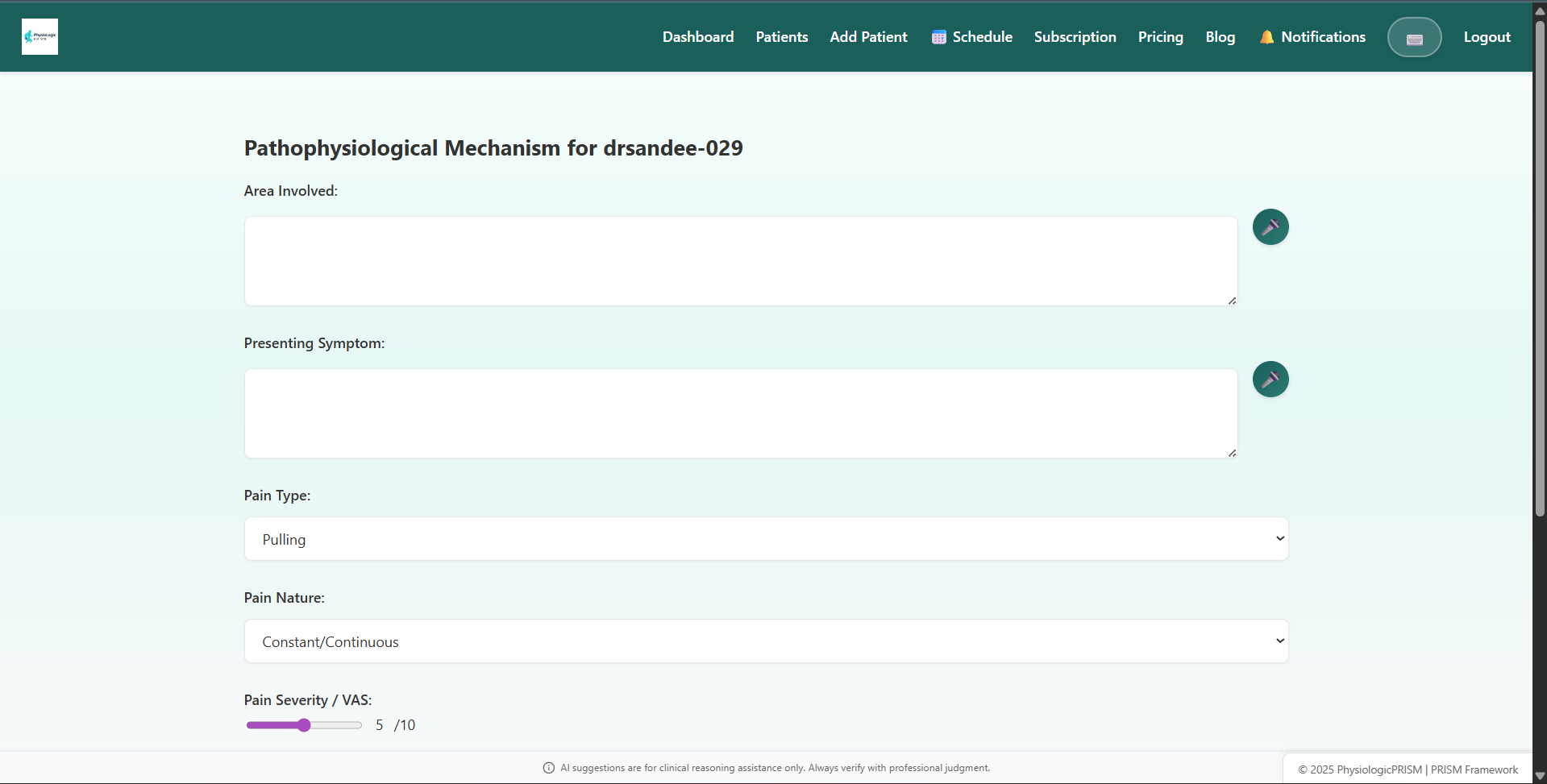
PhysiologicPRISM organizes pathophysiological analysis into clear components:
Area Involved
- Specific anatomical structures
- Body region affected
- Bilateral vs. unilateral involvement
Presenting Symptom
- Primary complaint description
- Associated symptoms
- Symptom behavior
Pain Characteristics
- Pain Type: Pulling, aching, sharp, burning, throbbing
- Pain Nature: Constant, intermittent, variable
- Pain Severity: VAS scale with slider interface
- Pain Irritability: Easily provoked vs. stable
- Stage of Tissue Healing: Acute inflammation (0-72h), proliferation, remodeling
AI-Powered Clinical Reasoning
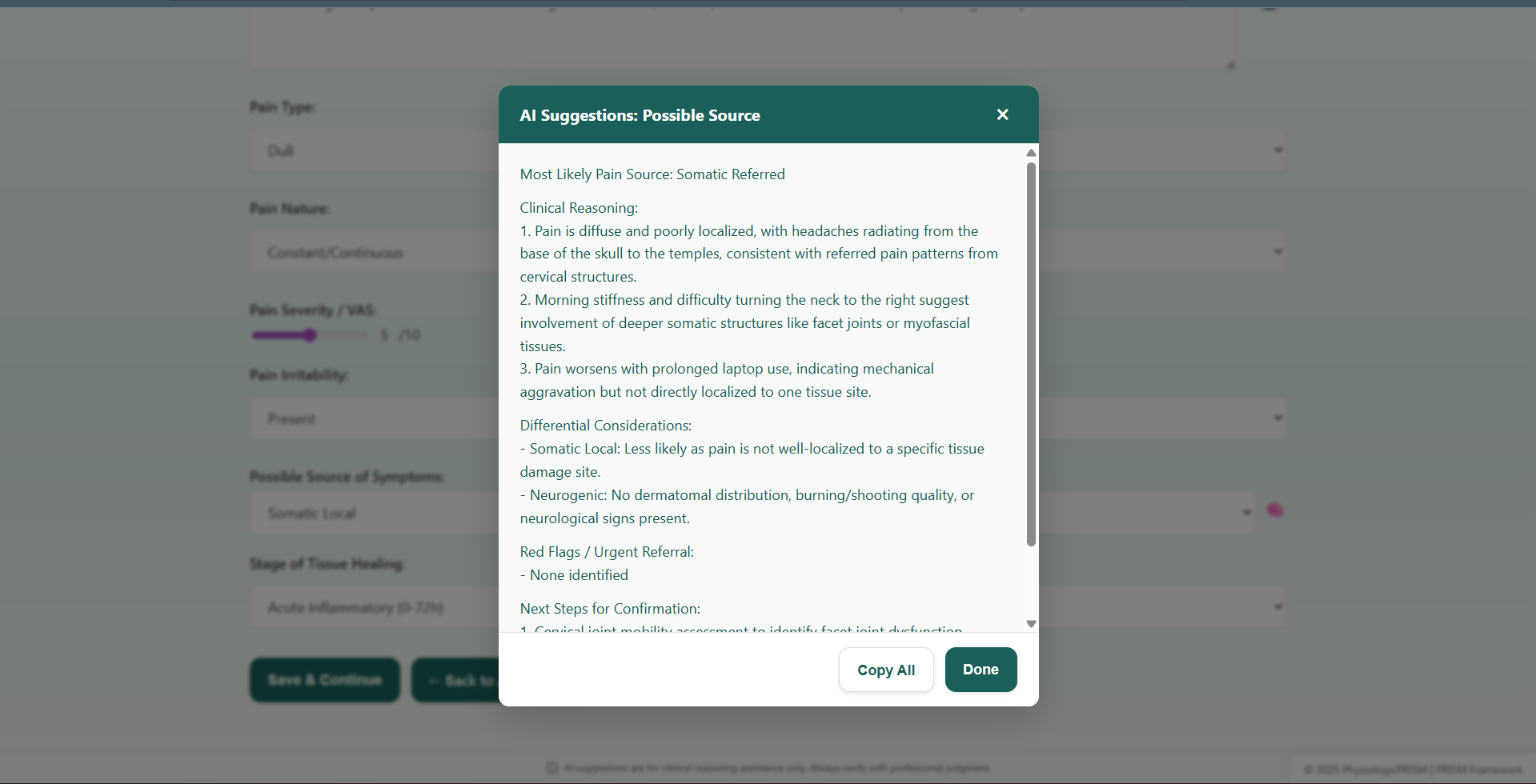
When you click the AI button, PhysiologicPRISM analyzes all assessment data and provides:
Most Likely Pain Source
Example: "Somatic Referred"
Detailed Clinical Reasoning
1. "Pain is diffuse and poorly localized, with headaches radiating from the base of the skull to the temples, consistent with referred pain patterns from cervical structures."
2. "Morning stiffness and difficulty turning the neck to the right suggest involvement of deeper somatic structures like facet joints or myofascial tissues."
3. "Pain worsens with prolonged laptop use, indicating mechanical aggravation but not directly localized to one tissue site."
Differential Considerations
- Somatic Local: Less likely as pain is not well-localized to a specific tissue damage site
- Neurogenic: No dermatomal distribution, burning/shooting quality, or neurological signs present
Red Flags / Urgent Referral
- Systematic screening for serious pathology
- Clear documentation of absence of concerning signs
- Guidance on when to refer
Next Steps for Confirmation
Specific examination recommendations:
1. "Cervical joint mobility assessment to identify facet joint dysfunction"
2. "Palpation of upper trapezius, levator scapulae, and suboccipital muscles for trigger points"
3. "Neurological screening if symptoms progress"
How AI Enhances Clinical Reasoning
1. Evidence-Based Pattern Recognition
The AI draws from thousands of clinical presentations to identify pain patterns, ensuring your analysis aligns with current evidence and clinical guidelines.
2. Comprehensive Differential Diagnosis
Never miss alternative explanations. The AI systematically considers all possible pain mechanisms and documents why each is more or less likely.
3. Red Flag Screening Integration
Automatic screening for serious pathology ensures patient safety while documenting your clinical decision-making.
4. Educational Value
Learn from the AI's reasoning process. Each suggestion includes the clinical logic, helping junior clinicians develop expertise.
5. Time Efficiency
What takes 15 minutes of careful analysis is completed in 2-3 minutes, allowing more focus on patient interaction and treatment.
Clinical Workflow Integration
Pathophysiological analysis sits at the heart of the assessment process:
Inputs from Previous Sections:
- Patient history provides symptom behavior and aggravating factors
- Pain location and quality from subjective examination
- Functional limitations and activity restrictions
Outputs to Next Steps:
- Guides objective examination focus
- Informs provisional diagnosis
- Directs treatment selection
How This Can Help Your Practice
PhysiologicPRISM's AI-powered pathophysiological analysis can:
- Streamline the analysis process
- Support systematic differential reasoning
- Provide evidence-based clinical support
- Generate clear explanations for patient education
- Help create documentation that meets professional standards
The Complete Clinical Reasoning Journey
PhysiologicPRISM guides you through systematic clinical reasoning:
1. Patient History - Comprehensive subjective data 2. Pathophysiological Mechanisms - Pain source analysis (you are here) 3. Provisional Diagnosis - Clinical impression 4. SMART Goals - Patient-centered objectives 5. Treatment Planning - Evidence-based interventions
Each step builds on the previous, creating a cohesive clinical narrative that demonstrates expert reasoning.
Getting Started
Experience smarter clinical reasoning:
1. Document Patient Presentation: Enter symptoms and pain characteristics 2. Click AI Analysis: Generate evidence-based reasoning 3. Review and Customize: Modify based on your clinical judgment 4. Continue Assessment: Use insights to guide examination
Start your free 14-day trial and elevate your clinical reasoning today.
Related Resources
- Clinical Reasoning Framework - Master the systematic approach
- AI Provisional Diagnosis - From mechanism to diagnosis
- Evidence-Based Treatment Planning - Match interventions to mechanisms
- Patient History Taking - Foundation for analysis
PhysiologicPRISM: Enhancing clinical expertise with intelligent assistance. Your judgment, amplified.